


Written and reviewed by Dr. Matthew Barney, D.C., chiropractor at Waterland Chiropractie Heusden, registered with the DCF, CCA and SNRC.
Last updated: 15 June 2026
Introduction
Facet arthrosis, a type of spinal osteoarthritis, can make your neck or back feel stiff and achy.
If you live in Heusden, Drunen, or Waalwijk and wake up with back stiffness, you’re not alone. Many people in our region experience this wear-and-tear condition and want to stay active despite the pain.
The good news is that with measured, evidence-informed chiropractic care and smart self-care, you can manage facet joint pain and keep moving with confidence.
What Is Facet Arthrosis?
Facet arthrosis is essentially osteoarthritis of the facet joints in your spine, the small joints at the back of each vertebra. These facet joints allow your spine to bend and twist, while also keeping it stable.
Over time, the cartilage lining those joints can wear thin from normal “wear and tear”, causing the bones to rub together and form bone spurs (small bony growths).
This breakdown of cartilage leads to loss of motion, pain, and stiffness in the affected area.
In plain language, facet arthrosis means the facet joints have become arthritic and less cushioned, often resulting in a stiff, painful back or neck.
You might also hear doctors use other terms for this condition.
Facet arthrosis is sometimes called facet joint osteoarthritis or facet joint syndrome.
It’s one part of the broader degenerative spine changes known as spondylosis (a fancy word for spine wear-and-tear).
Facet joint arthritis, facet arthropathy, and facet joint degeneration are other names that mean roughly the same thing. The key point is that the facet joints have undergone degenerative changes and become a source of pain.
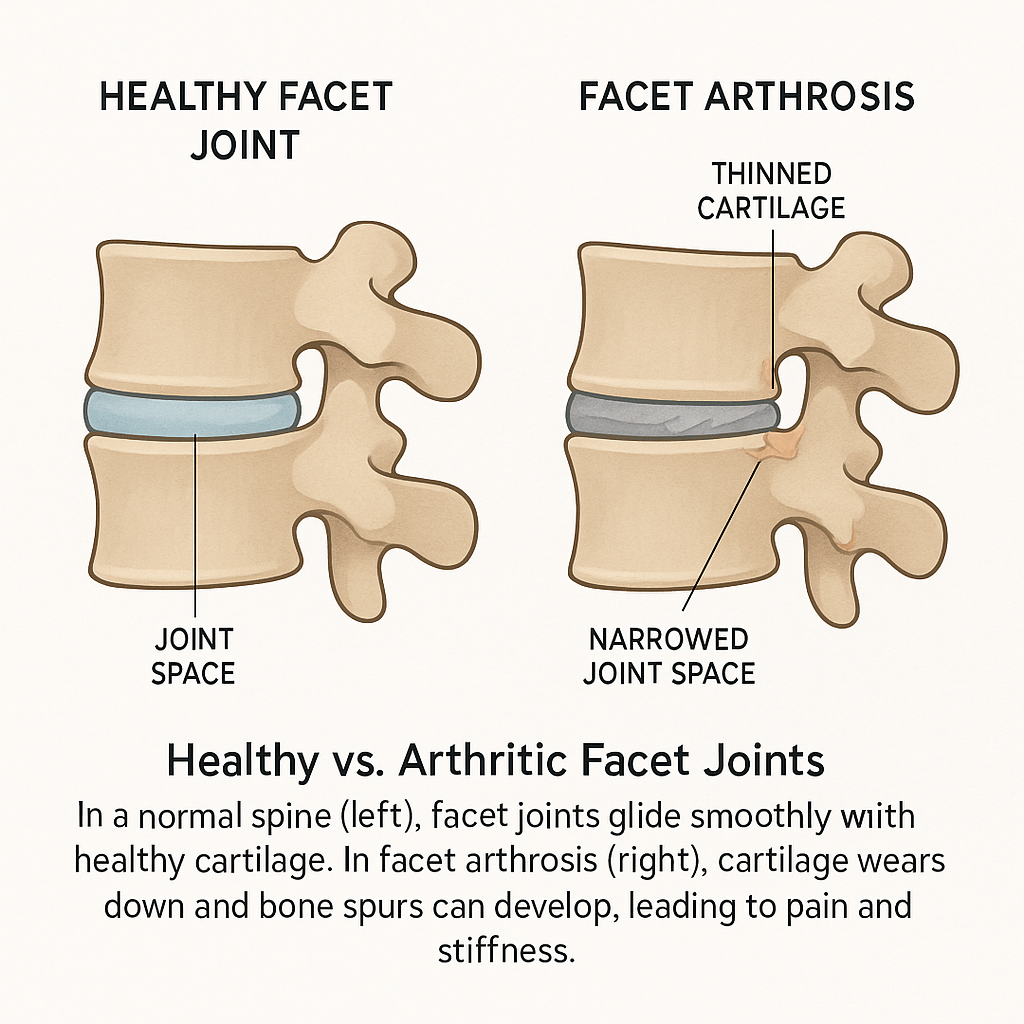
Healthy vs. Arthritic Facet Joints – In a normal spine (left), facet joints glide smoothly with healthy cartilage. In facet arthrosis (right), cartilage wears down and bone spurs can develop, leading to pain and stiffness.
Where does facet arthrosis happen?
It can affect any level of the spine, but it’s most common in the lower back (lumbar facet arthrosis) and neck (cervical facet arthrosis).
These regions carry a lot of our daily movement and weight, so the facets there see a lot of stress.
Lumbar facet arthrosis is a frequent cause of chronic low back pain and stiffness.
Cervical facet arthrosis (arthritis in the neck joints) can lead to neck pain and even contribute to headaches at the base of the skull in some cases.
Facet joints in the mid-back (thoracic spine) can also develop arthrosis, though less often.
It’s worth noting that facet arthrosis is very common as we age, in fact, by the time people reach their 60s, over 85% have X-ray evidence of facet joint osteoarthritis (even if they don’t all feel pain from it).
So, if your chiropractor mentions seeing “degenerative changes” or arthritis in your spine, remember that it’s a common part of ageing.
Not everyone with facet arthrosis will have symptoms, but for those who do, it can cause real discomfort and limit your activities.
The rest of this article will explain why facet joints become painful, how to recognize the symptoms, and what we can do at Waterland Chiropractie Heusden to help you manage it safely.
Causes and Risk Factors of Facet Joint Osteoarthritis
Facet arthrosis usually develops gradually from a mix of factors.
The number one cause is age-related degeneration; years of normal movement and minor stresses slowly wear down the joints (this natural ageing process is what doctors call degenerative changes or spondylosis).
In other words, time and gravity play a big role. But not everyone gets symptoms, and certain risk factors can make facet joint osteoarthritis more likely or more symptomatic:
Wear and tear over time:
Simply getting older is a risk. The spine’s joints undergo cumulative stress.
The cartilage thins out, and your body may even form extra bone (osteophytes or spurs) around the facets to stabilize the spine, which can further irritate the joints.
This is why facet arthrosis tends to appear in people over 40 and becomes more common each decade.
History of physical work or repetitive strain:
Repetitive loading and heavy labour can accelerate facet joint wear.
For example, someone who did heavy lifting or manual work from a young age may develop facet joint osteoarthritis sooner.
Occupations or sports that involve repeated bending, twisting, or lifting (like construction, factory work, or high-impact sports) put extra stress on the facets. Over the years, this can contribute to earlier or more severe arthritic changes.
Prior injury or trauma:
A past neck or back injury can kick-start degenerative changes in the facet joints.
For instance, a whiplash injury in a car accident might damage cervical facet joints and lead to premature arthritis there. Research shows that after whiplash, a significant number of people (up to 30–60%) develop chronic cervical facet pain.
Similarly, a bad fall or sports injury affecting the spine could set the stage for facet irritation and later arthrosis. The good news is trauma is an uncommon cause overall, most facet arthrosis is due to gradual wear rather than a single injury.
Poor posture or spinal alignment:
How we sit and move daily impacts our spine joints. Slouched posture, long periods of sitting, or imbalanced body mechanics can unevenly load the facet joints.
Over the years, this extra strain may contribute to degeneration. For example, habitually sitting with a slumped lower back can compress the facet joints in the lumbar spine.
Postural stresses at work (like craning your neck at a computer or frequently bending/twisting on the job) are subtle contributors that add up over time.
Sedentary lifestyle vs. overuse:
Interestingly, both inactivity and overuse can be problematic. Too little movement can weaken the muscles that support your spine, potentially increasing stress on facet joints when you do move (and leading to more “wear” on the joints).
On the other hand, overloading the spine with continuous high-impact activities without adequate rest can hasten joint degeneration.
It’s about balance, regular moderate movement keeps joints healthy, but chronic extreme stress (or none at all) can speed up arthrosis.
Degenerative disc disease (DDD):
The discs and facet joints work together in each segment of your spine. If a disc thins or collapses (common with age), it can change the mechanics and put extra pressure on the facet joints.
This is why degenerative disc disease often goes hand-in-hand with facet arthrosis.
A bad disc can cause facets to bear more load, potentially worsening arthritis in those joints. Likewise, facet joint osteoarthritis can contribute to disc stress. The whole spine is a connected system.
Obesity and weight: Extra weight adds extra load to your spine.
The facet joints carry some of that weight, especially in the lower back.
Being overweight or obese increases the strain on facets with every move. People who are obese are several times more likely to have lumbar facet osteoarthritis than those at a healthy weight.
Over the years, that additional pressure can accelerate joint degeneration. Managing weight can reduce this risk and ease existing facet pain.
Genetics and family history:
Some individuals may simply be more predisposed to joint degeneration.
If osteoarthritis “runs in your family”, you might develop facet arthrosis earlier or more severely than someone without that genetic tendency.
Our genes influence things like cartilage strength, how our body responds to injury, and even posture, all of which can affect facet joints.
Other factors:
Inflammatory arthritis conditions (like rheumatoid arthritis) can involve the facet joints, though this is less common.
Also, conditions like ankylosing spondylitis specifically target the spine joints (but these are separate from typical wear-and-tear facet arthrosis).
Smoking has been linked to increased spine degeneration too. And as mentioned, starting heavy physical work at a young age seems to raise the likelihood of early facet joint changes.
Most often, it’s not just one thing but a combination.
For example, imagine a 55-year-old from ’s-Hertogenbosch who has a desk job (lots of sitting), enjoys gardening on weekends (some bending and lifting), and has a bit of extra weight. They also had a minor car accident years ago.
All these factors together could contribute to developing facet arthrosis in the lower back.
The bottom line: facet joint osteoarthritis is usually due to gradual, degenerative changes in the spine, and certain lifestyle and health factors can speed it up.
The more we understand these factors, the more we can do to prevent or manage facet arthrosis, which we’ll discuss in the self-care section.
Symptoms of Facet Joint Pain (Facet Arthrosis)
Facet arthrosis in the neck or back often causes a distinct pattern of aches and stiffness.
Unlike a slipped disc that might cause sharp, shooting nerve pain, facet joint pain tends to be more localised and achy.
Here are common symptoms and patterns to be aware of:
A dull, localised ache:
Facet arthrosis typically causes a steady, dull pain right around the affected joints.
You’ll usually feel it in the immediate area of the spine, for example, in the low back just to one side of the spine, or in the neck near the base of the skull.
The pain can be on one side or both sides, depending on which joints are arthritic. Many people describe it as a deep ache or stiff feeling in the spine, rather than a sharp pain.
Stiffness, especially after rest:
Morning stiffness is a hallmark of facet arthrosis. You might feel particularly stiff and sore when you first get out of bed in the morning.
The spine may feel “locked up” or less flexible at first. This stiffness usually eases up after you get moving and warm up the joints.
Similarly, after any period of inactivity, say you’ve been sitting at your desk or in the car for a long time, you may notice back stiffness or neck stiffness on standing.
Facet joint pain often improves with easy movement throughout the day, unlike nerve pain, which might worsen with activity. Think of it like rusty hinges that loosen a bit once the door starts swinging.
Pain triggered by certain movements:
Facet joints are put under pressure by specific motions. Bending backwards (spinal extension) tends to pinch the facet joints and often worsens the pain.
For example, arching your back or looking up at the ceiling might hurt in an arthritic spine.
Twisting or turning your body or neck (rotation) is another common aggravator; you may feel a sharp twinge or increased pain when you twist to reach something or turn your head to check your blind spot.
Some people also report pain if standing up straight for too long (which extends the lower back a bit).
On the flip side, bending forward (flexion) tends to open up the facets and may relieve pain slightly. You might notice it’s comfortable to lean on a shopping cart, for instance, if you have lumbar facet pain.
Sudden movements or “jarring” impacts (like hitting a bump while driving or coughing hard) can also send a jolt of pain through an irritated facet joint.
Referred pain (achy but not nerve pain):
Facet arthrosis can cause pain that spreads to nearby areas, but it’s usually not true nerve radiculopathy.
For example, lumbar facet joint pain can radiate into your buttocks, hip, or thigh on the affected side.
You might feel an ache in the buttock or the back of the thigh that originates from the facet joint, this is sometimes called “pseudo-sciatica” because it’s an ache referred by the facet, not a pinched nerve.
The pain typically does not travel below the knee in facet cases. In the neck (cervical facets), pain can refer to the shoulder or upper back, or even up toward the back of the head or ear.
For instance, arthritic upper neck joints can refer pain that causes tension-type headaches at the skull base. The key is that facet-referred pain is usually a dull, spreading ache, and importantly, it does not cause numbness, tingling, or muscle weakness in the limbs.
If you have facet arthrosis, you shouldn’t be getting intense arm or leg symptoms like true sciatica or a pinched nerve would cause. (If you do have those neurological symptoms, that’s a sign something else might be going on, more on red flags in a moment.)
“Crunchy” or noisy joints:
Sometimes, arthritic facet joints might produce crepitus, faint grinding or popping sounds when you move in certain ways.
You might not hear it, but feel or notice a small “crack” in the neck or back as the rough joint surfaces move. This isn’t dangerous and often just indicates the joint isn’t moving as smoothly as before.
Measured chiropractic adjustments or mobilisations can often reduce that feeling by improving joint motion.
Flare-ups and good days/bad days:
Facet joint pain often ebbs and flows. Many patients have flare-ups where the pain increases for a few days or weeks, often after some trigger like unusually heavy activity, poor sleep, or even cold/damp weather (some people with arthritis report feeling more joint ache on rainy days).
During a flare, the facet joint and surrounding muscles can become inflamed, and you may feel more intense pain or find it harder to move. Then it might settle back down to a more manageable level.
This pattern of waxing and waning pain is common in facet arthrosis.
It’s not typically a steadily worsening pain day by day (unless something else is happening). Instead, you might have relatively better days and worse days.
Overall, facet arthrosis pain is considered mechanical, meaning it is influenced by your movement and activity. So by modifying activities and getting proper treatment, many people can control the intensity of their pain and avoid severe flare-ups.
When to Seek Help and Red Flag Symptoms
If you have persistent back or neck pain that you suspect could be facet joint related, it’s wise to get it checked out by a professional, especially if it’s lasting more than a couple of weeks or affecting your daily life.
A good rule of thumb:
If your pain doesn’t improve after 2–4 weeks of home care (or if it’s getting worse instead of better), it’s time to seek a proper evaluation.
A chiropractor is well-suited to assess mechanical spine pain like facet arthrosis and can guide you with conservative treatment. You should also consider seeing a chiropractor sooner if the pain is severe, limiting your activities, or worrying you.
Our goal is to identify what’s causing your pain and help you manage it before it knocks you off track from work, hobbies, or family time.
It’s important to differentiate typical facet joint pain from more serious issues.
Facet arthrosis itself doesn’t cause dangerous symptoms; it might hurt and frustrate you, but it shouldn’t paralyse you or make you ill.
However, certain “red flag” symptoms indicate that something beyond simple facet arthritis could be wrong.
Seek immediate medical attention if you experience:
Severe or progressive neurological symptoms:
For example, significant weakness, numbness, or tingling in both legs or arms, or difficulty lifting the foot (foot drop).
Facet pain alone doesn’t cause major weakness, so this could signal a pinched nerve or spinal cord issue.
Numbness around your groin or buttocks, or any loss of bladder/bowel control, is especially urgent, these could be signs of cauda equina syndrome (a rare but serious compression of nerves).
Back pain with fever or unexplained weight loss:
Facet arthrosis won’t cause a fever. A high temperature, chills, or unexplained weight loss along with back pain could indicate infection or another systemic issue.
Similarly, a history of cancer with new back pain is a red flag that needs prompt investigation, as is any constant, severe pain at night that doesn’t ease in any position.
Recent significant trauma:
If you had a major accident or fall and developed severe back pain, especially if you’re older or have osteoporosis, a fracture is a concern.
That situation warrants immediate medical evaluation rather than just assuming it’s facet pain.
Pain in areas not typical for mechanical back pain:
For instance, chest pain or pain that radiates into the abdomen could be something else (like cardiac or abdominal issues).
Upper back pain between the shoulders with no obvious cause might also need a closer look.
If your symptoms include things like fever, sudden severe weakness, numbness in the saddle area, bowel/bladder problems, or the pain came after a big injury, don’t wait.
Those are not caused by simple facet arthrosis and need urgent medical attention. Thankfully, these red flags are uncommon. Most facet joint pain presents with the more typical symptoms we described earlier (local aching, stiffness, mechanical patterns).
When in doubt, get checked out, better to be safe.
For most people with facet arthrosis, the scenario is manageable: you have on-and-off back or neck ache, stiffness in the morning, and pain that’s annoying but not incapacitating.
If that sounds like you, a chiropractor can likely help.
Let’s talk about how we approach assessing facet joint pain at Waterland Chiropractie Heusden.
Assessment at Waterland Chiropractie Heusden
When you visit Waterland Chiropractie Heusden with back or neck pain, we start by listening, truly understanding your problem.
We’ll have a friendly conversation about your symptoms, medical history, and daily activities. This history-taking helps us piece together clues (for example, learning that your pain is worse after gardening or that you have morning stiffness suggests facet irritation).
We encourage you to describe when the pain started, what it feels like, and how it’s affecting your life.
If you’re from Drunen or Vlijmen and your back pain keeps you from playing with your grandkids or enjoying a walk, we want to know that.
Your goals matter, whether it’s getting back to work comfortably or simply waking up without that nagging ache.
As a people-first practice, we believe the first step is to listen and reassure. Spine pain can be scary, but we explain everything in plain language so you’re not left in the dark.
After the chat, we move on to a thorough physical examination.
This is typically measured and collaborative, we’ll ask you to perform some movements and let us know what you feel.
Our chiropractic assessment for facet arthrosis may include:
Posture and movement tests:
We’ll observe your posture (how you stand, sit, and move). Sometimes facet issues show up as a slightly guarded posture or decreased curve in the spine.
We’ll guide you through range-of-motion tests, for instance, bending forward, backwards, and sideways, and turning left and right. We’re looking to see which movements are limited or painful.
Often, pain with extension and rotation (like leaning back and twisting) points toward facet joint involvement, as these motions load the facets.
If you report stiffness easing with forward bending, that’s another clue. We always ensure you move within a comfortable range, no forcing.
Palpation of the spine:
“Palpation” means we use our hands to feel along your spine. We carefully press and feel the joints and muscles in your neck or back.
Facet arthrosis can often be detected by tenderness when pressing on the facet joints or the tight muscles around them.
You might feel a “sore spot” on one side of your lower back, for example, corresponding to an arthritic facet joint. We also feel for areas of muscle spasm or tension (common when a facet joint is irritated, as muscles around it tighten up to protect it).
Orthopedic tests:
Chiropractors perform some orthopedic maneuvers to pinpoint pain generators.
For example, we might do a test similar to the Kemp’s test for the low back, this involves guiding you to extend and rotate your lumbar spine to see if it reproduces your pain.
In the neck, we might carefully turn and extend your head (Spurling’s maneuver) to stress the facet joints.
These tests help confirm if the facets are likely the troublemakers.
Don’t worry, we explain each test and do them slowly. If something hurts, we stop. These exams shouldn’t aggravate you badly; they are just to identify the painful patterns.
Neurological exam:
Because we want to rule out nerve involvement, we’ll check some simple neuro indicators.
This can include testing your reflexes (like tapping below your kneecap or on your elbow to see the reflex, abnormal reflexes might hint at nerve compression).
We also may check muscle strength in your arms or legs and see if any areas of skin have reduced sensation. All of this is to ensure that your pain is truly facet joint pain and not coming from a pinched nerve in the spine.
As mentioned, facet arthrosis typically does not cause numbness or muscle weakness, so if we found any, we’d investigate further or refer you appropriately.
We might also do a balance or gait check if needed, especially in older patients, to ensure nerve function is fine.
Throughout this exam, we keep the atmosphere relaxed.
We’ll let you know what we’re finding in real-time (for instance, “I feel a little stiffness here at L4-L5, does it feel tender when I press?”).
At Waterland Chiropractie Heusden, we take pride in explaining our findings in plain language, with no jargon that leaves you puzzled.
After the history and exam, we usually have a good idea if it’s likely facet arthrosis causing your trouble and after the assessment, we will discuss our findings and diagnosis with you.
If we believe your pain is indeed due to facet joint arthrosis (and often it is, given the pattern), we’ll walk you through a plan.
At Waterland Chiropractie Heusden, we prioritise patient education; we want you to understand what’s going on in your spine. We might show you models or drawings of a facet joint, so you can visualise the problem.
No question is silly, and we encourage you to ask anything on your mind. Once you feel informed, we’ll outline recommended treatment options (which we cover in the next section).
Importantly, we tailor the plan to fit your life, work, and goals, whether you’re a busy parent in Vlijmen or an active retiree in Waalwijk, the plan should be practical for you.
And if during the exam we find that something doesn’t add up (for instance, signs that it’s not facet pain but maybe a disc herniation or another issue), we’ll be transparent about that and adjust our recommendations.
Your safety and well-being guide our decisions at every step.
Chiropractic Treatment Options for Facet Arthrosis
Treatment for facet arthrosis at our practice focuses on measured, conservative care to relieve pain, restore mobility, and help you manage the condition long-term.
We never promise a “miracle cure”; remember, we can’t reverse the arthritis in the joints. But we can often significantly improve your quality of life by improving how those joints move and how you feel.
Our approach at Waterland Chiropractie Heusden is evidence-informed and tailored to each patient’s needs and comfort level.
Here are the main components of our chiropractic care for facet joint pain:
Measured Spinal Adjustments and Mobilisations:
Chiropractic adjustments are famous for the “crack,” but know that modern chiropractic is often far less forceful than people expect, especially for arthritic conditions.
Our chiropractors use specific manual adjustments to the spine, aiming to improve the motion of stiff facet joints. If you’re a suitable candidate, a measured thrust may be applied to the affected joint (often it’s so measured you’d be surprised, not the dramatic twist you might imagine).
This can unlock a stuck facet joint, reduce pressure, and give you an immediate sense of relief or easier movement.
Measured Hands‑On Care:
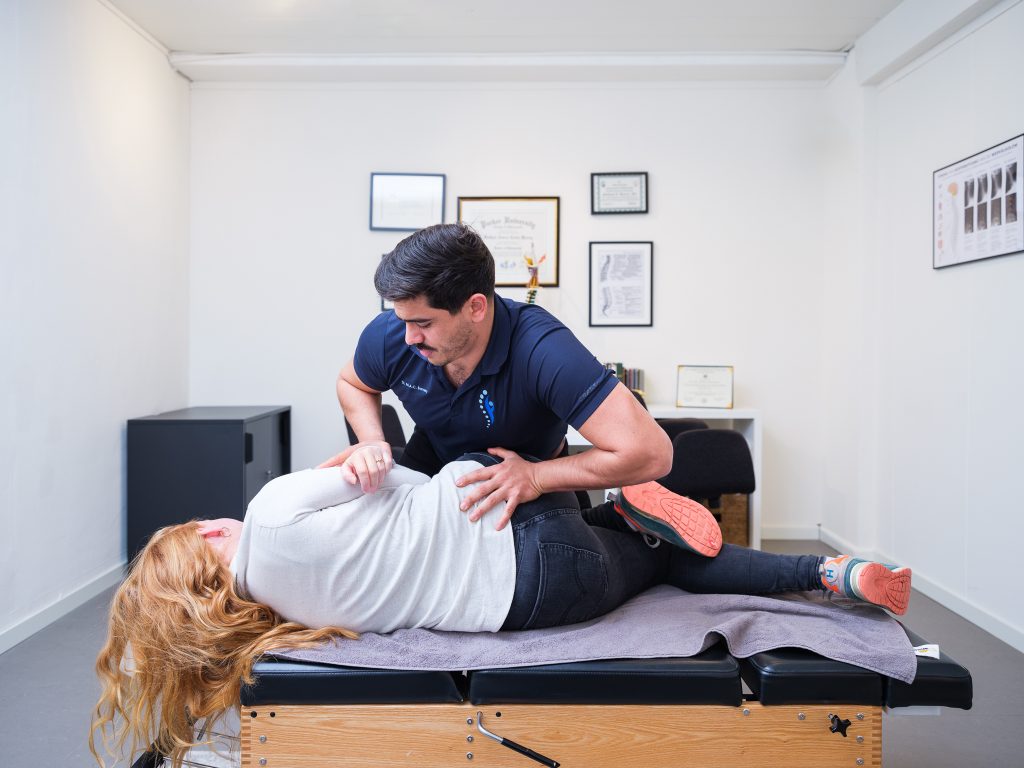
At Waterland Chiropractie Heusden, treatments are tailored and low‑force; here, a chiropractor uses pressure to improve a stiff lower‑back facet joint.
However, we always adjust within your comfort. If high-velocity adjustments (the ones that sometimes cavitate or “pop”) aren’t right for you, say you’re older, have very sensitive joints, or simply are anxious about it, we have low-force techniques as alternatives.
These can include slow mobilisation (no quick thrust, just rhythmic stretching of the joint), or instrument-assisted adjustments using small tools that deliver a light tapping force.
The goal is the same: to coax the facet joints into moving better and alleviate the mechanical stress.
Many patients with facet arthrosis find that after a series of measured adjustments, their spine feels looser and less painful, and they can bend or turn with less restriction.
Soft Tissue Therapy:
Facet joint pain often comes with tight and achy muscles in the surrounding area. For example, if a facet in your lower back is inflamed, the muscles nearby (like the lumbar paraspinals or QL muscles) might spasm or stiffen in response, which can add to your pain.
We address this with hands-on soft-tissue techniques. This might involve massage, trigger point pressure, or stretching techniques applied to the muscles around the spine. By easing muscle tension, we not only provide relief but also help the adjustments “hold” better (relaxed muscles won’t pull the joint right back into a stiff position).
We can also use myofascial release or measured instrument-assisted soft tissue work if needed.
Patients often say this part feels relieving; it’s like kneading out the knots. Reducing muscular guarding around the facet joints can significantly decrease your overall discomfort.
Exercises and Rehab (Movement Therapy):
A crucial part of managing facet arthrosis is improving your strength and flexibility so the facet joints aren’t bearing all the load.
We will guide you through specific exercises tailored to your condition and ability.
Don’t worry, these are generally safe; think of them as therapeutic movements rather than intense workouts.
For lumbar facet arthrosis, we might show you core stabilisation exercises (to strengthen your abdominal and gluteal muscles, which support the spine) and hip stretches (since tight hips can force more movement into the lower back facets).
For cervical facet arthrosis, we’ll teach you neck stretches (to maintain range of motion) and maybe some scapular (shoulder blade) strengthening exercises, because better shoulder posture can reduce neck strain.
Flexibility and strength training are crucial in easing pressure on arthritic joints.
Research and clinical experience show that strong, supportive muscles help take the load off facet joints, and flexible muscles/joints help maintain range of motion.
We might incorporate exercises like pelvic tilts, cat-camel stretches, lumbar rotation stretches, or chin tuck exercises for the neck. Every “homework” we give will be demonstrated and practised in-office to ensure you’re comfortable doing it.
Exercise is generally very safe and beneficial for facet joint pain; it can even reduce symptoms and improve function when done correctly.
We’ll create a simple routine for you (maybe 10–15 minutes a day) to build your resilience.
Posture and Movement Coaching:
Because daily habits greatly affect facet joints, part of our treatment is education and coaching on posture and body mechanics.
We’ll give you tips on how to perform your everyday activities in spine-friendly ways.
If you have to lift objects (even as simple as grocery bags or picking up kids/grandchildren), we’ll remind you to bend at the hips and knees (squat) rather than bending at the waist, to protect those facets.
We also discuss pacing and load management: if a certain activity flares your back (say, gardening or DIY projects), how can we break it into smaller chunks with rest in between, instead of doing a 4-hour marathon that leaves you in pain?
Sometimes, small changes like taking “movement breaks” every 30-60 minutes of desk work can prevent a lot of stiffness.

Posture Matters:
Simple changes, like using a lumbar cushion and taking “movement breaks” to stretch, can ease strain on your facet joints during the workday.
We’ll personalise advice, for instance, for a patient from Nieuwkuijk who drives a lot, we’d discuss car seat setup and taking stretch breaks during long drives.
For someone from Waalwijk who loves golf, we might talk about warm-up routines and how to avoid too much extension in their swing.
The idea is to empower you with knowledge so you can control the factors that influence your pain day-to-day.
Modalities for Pain Relief (Heat/Ice and More):
We’ll guide you on simple pain relief measures you can use at home. Heat therapy is wonderful for facet arthrosis stiffness, a warm shower in the morning, a heating pad, or a hot water bottle applied to a stiff neck or back can loosen tight muscles and increase blood flow.
Heat often helps with that morning stiffness or to relax before doing your exercises.
Ice is useful if you’re having an acute flare-up and suspect there’s inflammation. For example, after a day of heavier activity that aggravates your lower back, applying an ice pack (wrapped in a cloth) for 15 minutes can numb pain and reduce swelling.
We’ll explain when to use heat vs. ice for best results (heat for stiffness, ice for acute pain/inflammation is a good rule of thumb).
Additionally, while we do not provide spinal decompression therapy (traction machines) at our practice, we might use manual traction techniques carefully if it suits your case, for instance, some manual stretching of the neck or lower back can create a relieving pressure release for facet joints (this is done carefully and is not a primary treatment, just adjunct comfort measure).
We also sometimes employ joint mobilisation devices or blocks to carefully ease pressure on the spine.
Expected course of care and outcomes:
Every patient is different, but we’ll set some realistic expectations. Typically, with facet arthrosis, our aim is to reduce pain, improve mobility, and improve your function, helping you do the activities you need and love with less difficulty.
Many patients start to feel some relief within the first few sessions (perhaps 2–4 weeks of treatment), especially in terms of increased flexibility and decreased muscle tension.
It might take a bit longer (several more weeks) to significantly reduce the pain, particularly if you’ve had facet joint pain for years.
We usually recommend a short course of treatments (for example, a couple of visits per week for a few weeks) to get the joint moving better and muscles relaxed. As you improve, we taper the visits. You might then come in once every few weeks or months for maintenance or as needed.
Some patients with chronic facet syndrome do benefit from periodic “tune-up” adjustments to manage stiffness. We’ll discuss if that’s appropriate in your case.
It’s important to know that while we can’t cure arthritis (no one can), many patients with facet arthrosis can reach a point where it’s just an occasional mild annoyance rather than a daily hindrance.
Our goal is to maximise the function of your arthritic joints and minimise your pain, so you can have the kind of life you want (as one chiropractic expert put it: chiropractic shines in optimising function in an arthritic joint).
By restoring better movement in the facets, we help break the cycle of pain and stiffness.
You’ll likely notice improvements like: getting out of bed is easier, you can stand or sit for longer without pain, you don’t need to crack your own back as much, and your “bad days” aren’t as bad as before.
We also measure progress in functional terms, maybe now you can play with the grandkids longer, or return to your Zumba class in Drunen, or simply work at your desk without constant distraction from pain.
We keep the care patient-centred and conservative-first.
If something isn’t helping you, we adjust the approach. Throughout your care, we’ll continue to emphasise self-management strategies (coming up next) so that you feel in control of your condition, not the other way around.
Most of our facet arthrosis patients become quite knowledgeable about their spines and learn to prevent flare-ups, which is a victory in itself.
How facet arthrosis tends to behave over the years, and how much your age really decides
Most people leave the appointment turning over the same question: where will this be in five or ten years? Facet arthrosis does not necessarily run downhill in a straight line. Far more often there are long, uneventful stretches when the back or neck barely registers, broken by shorter flare-ups after an awkward movement, a punishing week or too many hours in a chair, and a flare-up tends to reflect the load of those weeks rather than the direction things are heading. Memory plays its part too, because quiet months leave no trace and bad ones do, so looking back it all seems to have gone worse than it did.
It also explains why a radiology report can read so grimly while daily life feels manageable. What a scan shows is the shape a joint has settled into, not the amount of pain it causes, which is why some people have obvious facet arthrosis and have never lost a week to it, while others have images a radiologist would call unremarkable and symptoms that keep coming back. One joint, one day: that is what a report captures, and it is nowhere near enough to tell you what the next few years hold.
The grading words in those reports, mild, moderate, marked or severe, land far harder than anyone intended. They are shorthand, so that two clinicians looking at the same joint reach for the same term, and they are nothing beyond that: no timeline, no pain score, no forecast of what you will manage at seventy. On its own, marked does not mean more pain is coming, and mild buys nobody a quiet year. If a later report reaches for a heavier word, heavier symptoms do not automatically follow.
Age counts for something, but it decides less than most people assume. Facet arthrosis does show up more often in older age groups, though that is a statement about groups: two people born the same year can be carrying very different joints. And the age on the report mostly records when somebody happened to be scanned, not when the changes began. What usually happens next is arithmetic: this much wear at forty, so three times as much by sixty. Wear keeps no such schedule and symptoms do not track the calendar, and the people most tempted by that sum are the ones who hear the diagnosis young, which is exactly when it holds up least.
When you weigh up your own prospects, the line worth drawing is between what is settled and what is still in play. Your age, your build, an injury from a decade ago and the years already behind you are settled. Still in play is how much your spine is asked to carry from one day to the next, how much of that work the muscles around it absorb, and how long it takes you to get going again after a flare-up, and plenty of patients find there is more give in those three than the report had led them to expect.
An outlook is not fixed on day one. How your symptoms behave over the first weeks and months usually says more about where this is heading than the images do, and we revise what we expect as we learn more. What counts as realistic in your case depends on your history, what your back or neck is asked to do, and what the examination turns up. At a first appointment we will go through the report with you and separate what it does say about the years ahead from what it does not.
Facet arthrosis at work: what the job asks of your spine
Your job title tells us less about your back than your rota does. A painter, a nurse, a delivery driver and someone at a desk can all have wear at exactly the same level of the spine and still ask four completely different things of those facet joints. Work is the heaviest single demand most spines meet in a day, which is why the useful question is rarely whether you can work at all. It is which parts of the day put the most through those joints, and that is what we ask about.
With lifting and carrying work, it is rarely the single heavy lift that tips things over. The strain comes from repetition, and from bending and turning while you hold a load, so the many moderate lifts spread through a shift usually count for more. Work that keeps you on your feet does something different again. Hours in a hairdressing salon, on a building site or behind a counter hold the lower back in a slightly hollow position, and that is the position in which the facet joints take most of the weight. Many patients find that switching between the two kinds of demand helps them more than simply lifting less.
Driving and desk work look like the easy end of the scale, though the facet joints often get a harder time of it than that suggests. At a desk the difficulty is not the chair but the duration: one position held for a whole morning, so the same joints and the same muscles work with nothing to break the pattern. Long stretches at the wheel stack more on top of that, because a fixed seated position, the vibration of the road and the loading and unloading at either end tend to arrive in blocks of several hours. The distinction is worth making, because a well set up workstation can only do so much if your schedule keeps you in the seat until lunch.
If symptoms keep returning through the working week, or simply do not settle, it is worth involving the bedrijfsarts, the occupational health doctor. In the Netherlands you can usually reach one through your employer or the occupational health service, without having to call in sick first. What comes out of it is often more modest than people brace for: a period of lighter lifting, tasks moved around the week, a rota with more alternation between sitting, standing and walking. Raising it is part of managing a long-term condition, not an admission that you cannot cope.
After a flare-up it is tempting to hold off until the pain has gone completely before taking your full workload back on. Building the load up in stages usually serves people better: the lighter parts of the job first, the heavier ones once those sit comfortably, at a pace you agree with your occupational health doctor or with us. It can feel like the wrong instinct at the start. Even so, many patients find that a staged return gets them back to their usual level more often than waiting for the pain to reach zero. If your symptoms differ from what you are used to, see the section on when to seek help and red flag symptoms.
So work-related advice at Waterland Chiropractie Heusden starts with a plain question: what does your working day actually involve? How many hours are you on your feet? How heavy is the lifting? How long do you drive without a break, and when in the day do the symptoms usually build? Matthew Barney D.C. tailors the treatment plan and the practical advice to those answers, so they fit the job you genuinely do. And if you have a conversation coming up with your employer or your occupational health doctor, we are happy to help you work out what to put on the table.
Self-Care and Prevention Tips
Living with facet arthrosis doesn’t mean you have to give up your favourite activities or resign yourself to constant pain.
There are many self-care steps and lifestyle adjustments you can make to support your spine health and possibly slow the progression of degenerative changes.
Our philosophy is to encourage patients to be proactive, little daily habits can add up to big improvements.
Here are some practical tips for caring for your facet joints and preventing painful flare-ups:
Keep moving with “movement snacks”:
Avoid staying in one position for too long. Facet joints love easy motion.
If you have a desk job or a long drive, make it a habit to take short breaks every 30-60 minutes. Stand up, stretch your arms overhead, do a little back bend or wiggle, or take a quick walk to the water cooler.
These “movement snacks” lubricate your joints and prevent stiffness.
Many facet pain sufferers find that just standing and arching backward a bit (not too far, just a controlled extension) can relieve that building stiffness from sitting.
Set a timer or use your phone’s reminder if needed. Regular movement throughout the day can significantly reduce those end-of-day aches.
Stretch and stay flexible:
Incorporate some daily stretches for your neck, back, and surrounding areas.
Measured range-of-motion exercises help maintain flexibility and joint mobility. For example, in the morning or before bed, you can do slow neck circles or tilts (side to side, looking left and right), easy low-back stretches like pulling your knees to chest or the cat-camel stretch on hands and knees.
Yoga or tai chi are excellent low-impact ways to stay flexible and improve balance (just avoid extreme poses that aggravate your pain.
Remember, a little discomfort is okay as stiff joints loosen up, but sharp pain is not; don’t push into painful ranges. The goal is to keep those facet joints from getting too stiff over time. Even on days you feel good, keep up with light stretching to maintain the gains.
Strengthen your core and support muscles:
Along with flexibility, building strength in the right places will offload your facet joints.
Focus on core strength (abs, back muscles, pelvic floor) and hip and leg muscles.
Strong glutes and thighs help support the low back; strong shoulder and upper back muscles support the neck.
Simple exercises like bridges, pelvic tilts, planks (or modified knee planks), and wall sits can strengthen the spine’s support system. Using stretchy resistance bands for rowing exercises can strengthen mid-back muscles.
Stretching and Strengthening:
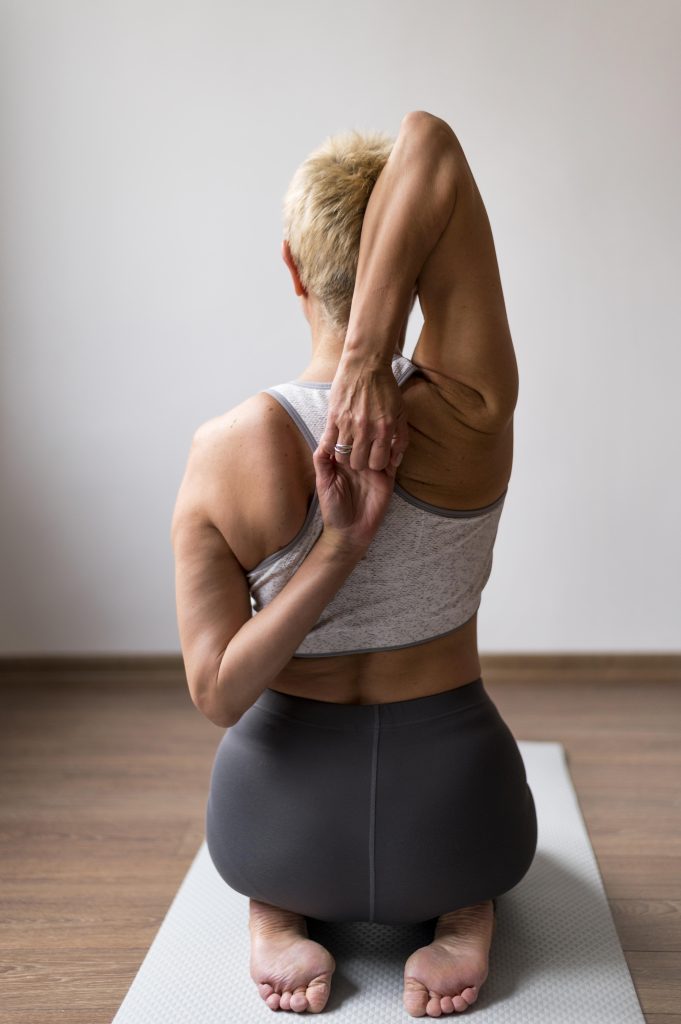
Consistent home exercises, like easy back stretches or core‑strengthening moves shown by your chiropractor, help support your spine and prevent facet‑pain flare‑ups.
Even doing chair stands (standing up from a chair without using your hands, repeatedly) is great for your legs and core. Building muscle doesn’t mean bulking up, it means improved endurance so those muscles can hold your posture without fatigue.
Stronger, more stable muscles ease pressure on arthritic facet joints and may even slow the progression of arthritis by reducing mechanical stress.
Aim to do strengthening exercises 2-3 times a week. A chiropractor can design a safe program for you. Remember to start low and go slow, gradually increasing intensity as tolerated.
Mind your posture (ergonomics):
How you sit, stand, and sleep matters. Work on your posture so your spine is in a neutral, aligned position as often as possible.
When sitting, use a chair with good lumbar support or a small pillow in the curve of your lower back to maintain that natural arch. Keep your computer monitor at eye level to avoid craning your neck. If you use a phone or tablet a lot, try to hold it up rather than looking down for prolonged periods (so-called “tech neck” can aggravate cervical facets).
When standing for a while, maintain even weight on both feet and avoid an excessive swayback posture. Prolonged sitting can aggravate back and neck stiffness, so intermix it with standing or use a sit-stand desk if possible.
For sleep, a medium-firm, supportive mattress is typically best for spinal arthritis. Use a pillow that keeps your neck in a neutral position (not too propped up, not too flat). Side sleepers might need a thicker pillow than back sleepers.
These little adjustments reduce continuous strain on your facet joints day and night.
Healthy weight and diet:
We mentioned weight as a risk factor. If you’re carrying extra kilos, even a modest weight loss can reduce the load on your spine’s joints. Think of it this way: every 5 kg of excess weight is like carrying a heavy backpack all the time; your lower back facets feel that.
By aiming for a healthy weight through balanced diet and exercise, you reduce pressure on the facet joints (people with obesity have up to 5x greater odds of lumbar arthritis).
Focus on a diet rich in anti-inflammatory foods too: vegetables, fruits, lean proteins, omega-3 fatty acids (from fish, nuts, flaxseed) can support overall joint health. Staying hydrated is also good for your discs and joints.
While diet changes won’t cure facet arthrosis, they contribute to your overall musculoskeletal health and can improve your energy for exercise.
Regular low-impact aerobic activity: Don’t be afraid to stay active.
Regular exercise is one of the best things you can do for facet joint pain.
Low-impact aerobic activities increase blood flow to spinal structures, help control weight, and release endorphins (natural pain-fighters). Great options include walking, cycling on a stationary bike, swimming or water aerobics, and using an elliptical machine. These activities get you moving without pounding your spine.
Start with what you can manage, even a 10-minute walk around Heusden’s neighbourhood is beneficial. Gradually build up duration. Aim for at least 30 minutes of moderate activity most days if possible.
Many people find that after the initial stiffness, movement reduces their back pain and they feel better than if they stayed still. Listen to your body, though: if a certain activity consistently causes pain (e.g., running on pavement might be too jarring for some), switch to less forceful options.
The ACSM (American College of Sports Medicine) advises people with chronic back pain to stay as active as those without pain, adjusting intensity as needed.
Motion is lotion for the joints!
Modify activities that aggravate your facets:
You can often still do the activities you love by making some tweaks.
For instance, if golf or tennis aggravates your back, consider using a more flexible stance or doing extra warm-up and core exercises to support your swing.
If gardening flares your facets, use raised beds or gardening stools to minimise bending, and take breaks to stretch backwards (opposite of the forward bending you do while gardening).
Avoid heavy lifting or deep twisting movements when possible; use assistive tools (dollies for moving heavy objects, long-handled tools, etc.). When you do lift, use your legs and keep objects close to your body.
If you have lumbar facet pain, avoid repeatedly bending backwards or twisting with load; for example, be cautious with exercises like high-impact aerobics, overhead lifts, or certain yoga poses that hyperextend the spine.
Those with neck facet issues should avoid activities that compress the neck (like carrying heavy shoulder loads).
The idea isn’t to stop all fun, it’s to be mindful and creative.
Maybe you opt for two lighter shopping bags in each hand instead of one heavy bag on one side. Maybe when playing with grandkids, you sit on the floor with them instead of constantly bending over.
Small changes can prevent big flare-ups.
Use heat or ice for flare-ups:
We touched on this, but to reiterate, as self-care: heat is your friend for chronic stiffness, take a warm bath, use a microwavable heat pack, or even try an infrared sauna if available (some find deep warmth very soothing for arthritic joints).
Heat, especially before exercise or in the morning, can loosen you up.
Ice is helpful when a facet joint is really irritated (say you twisted wrong and now that spot is inflamed). Applying a cold pack wrapped in a towel for 10-15 minutes can numb pain and tame inflammation.
Some patients alternate heat and ice.
Find what your body likes.
Stay positive and engaged:
Mental and emotional wellness plays a role in chronic pain.
Facet arthrosis is a manageable condition, and maintaining a positive mindset helps. Practice stress-reduction techniques that you enjoy; be it mindfulness meditation, breathing exercises, or simply a hobby that relaxes you.
Stress can tighten your muscles and potentially heighten pain perception. Conversely, laughter, social activities, and doing things you enjoy can reduce pain by boosting endorphins.
Don’t let the pain isolate you, keep up with safe activities, adapt as needed, and celebrate small improvements. Many patients find that as they build confidence (“Hey, I walked 3km today and I’m okay!”), their fear of movement lessens, and they start doing more and feeling better (a concept known as avoiding the “fear-avoidance” cycle).

By integrating these self-care tips into your daily routine, you become an active participant in your healing.
At our practice, we love to hear when a patient says, “I tried those stretch breaks at work and my back felt better by evening,” or “I’ve started walking in the Haarsteeg park every other day and I think it’s helping.”
These are indicators that you’re gaining control over the condition, rather than it controlling you. And remember, prevention is easier than treatment, so even on good days, continue with your healthy habits to keep those facet joints happy.
Finding Relief in Heusden – Your Next Step
Dealing with facet arthrosis can be frustrating, but you don’t have to go it alone.
At Waterland Chiropractie Heusden, we’re here to help you navigate this condition with a measured, personalised approach.
Our experienced chiropractors have helped many people from Drunen, Vlijmen, Waalwijk, and the ’s-Hertogenbosch area find relief from back and neck stiffness using safe, conservative methods.
We take the time to listen to your story, thoroughly assess your spine, and then create a plan that fits your life and goals.
Imagine starting your day with less pain and more ease of movement, getting back to the activities you enjoy, whether that’s playing sports, gardening, or simply keeping up with your kids and grandkids.
While facet arthrosis is a chronic condition, it can be managed. With regular chiropractic care, targeted exercises, and smart lifestyle changes, you can significantly reduce flare-ups and improve your spine’s function.
Many of our patients tell us they feel more in control and optimistic once they understand their condition and see progress in their pain and mobility.

Take the next step toward relief.
Your spine will thank you, and we’ll be with you every step of the way.
If you’re in Heusden or the surrounding towns and are ready to address your facet joint pain, we invite you to book an evaluation with us.
We’ll carefully examine your situation and explain all your options, just honest advice and supportive care. You’ll never be rushed, and you’ll never be treated like just a number in a clinic; we focus on people, not cases.
Let’s work together to ease your pain, improve your movement, and help you stay active for work, hobbies, and family.
We’re proud to serve our local community, from Heusden and Drunen to Vlijmen, Nieuwkuijk, Elshout, Haarsteeg, Waalwijk, and ’s-Hertogenbosch, with chiropractic care that is tailored to you.


(FAQs)
Facet arthrosis is osteoarthritis affecting the facet joints of your spine.
It’s essentially the same process as arthritis in a knee or hip (wear-and-tear damage to cartilage), but in the small back or neck joints.
Unlike some other forms of arthritis, facet arthrosis often causes localised back or neck pain and stiffness, especially with certain movements.
It’s a type of “spondylosis,” meaning age-related degeneration in the spine. The key difference is location, facet arthrosis is specific to the spine’s facet joints.
Facet joint pain tends to have certain patterns. It’s usually a dull ache in the immediate area of the spine (often lower back or neck) that gets worse when you lean backwards or twist.
It may improve when you lean forward. It can refer pain to nearby areas (buttocks, thighs, shoulders) but typically doesn’t cause numbness or tingling in the limbs.
Disc pain, on the other hand, might be sharper, worsen with bending forward or coughing, and can pinch nerves, causing sciatica or arm tingling.
A chiropractor can perform specific tests during an exam to differentiate facet pain from disc or other sources.
Often, facet pain is confirmed if pressing on the facet joints or guiding you in extension recreates your pain, and if neurological tests are normal.
Yes, a chiropractor can be very helpful in managing facet arthrosis.
While we cannot reverse the arthritis, chiropractic treatments can restore some mobility to stiff facet joints and reduce muscle tension, which often leads to pain relief.
Measured spinal adjustments or mobilisations can improve how the joints move, easing pain with activities.
We also provide exercise guidance, posture coaching, and other therapies (like muscle work and advice on heat/ice) to support your joints.
According to experts, chiropractic care is one of the safest therapies for back and neck pain due to osteoarthritis.
Many patients experience reduced pain and better flexibility after a series of treatments.
It’s a conservative approach, no drugs or surgery, and is often recommended as a first-line treatment for chronic back pain.
It varies per person, but generally, patients start to notice some improvement within a few weeks of consistent care.
Typically, we might see you a couple of times per week for the first 2–4 weeks, during which you may feel incremental changes: maybe you’re a bit less stiff in the mornings or the pain isn’t as sharp with certain movements.
By 4–6 weeks, many patients report significant relief, for example, being able to sit or stand longer with less pain, or needing painkillers less often.
Keep in mind, chronic facet arthrosis might require longer management; some people continue with periodic maintenance adjustments to keep mobile.
We’ll reassess progress regularly. The goal is steady improvements in pain and function; you likely won’t be “100% pain-free” overnight, but with each visit and with your own exercises, you should feel a step closer to comfortable movement.
In general, facet arthrosis is a stable condition and doesn’t pose huge risks if managed sensibly.
However, avoid activities that consistently aggravate your pain, such as heavy lifting with poor form or repetitive high-impact exercises without rest.
Sudden twisting or extreme extension (bending backwards) under load can irritate arthritic facets, so use caution, for example, do controlled rotations rather than forceful ones in the gym.
Listen to your body’s signals: if a movement causes sharp pain, ease off.
From a treatment standpoint, chiropractic adjustments are very safe for facet arthrosis, but if you have additional issues like osteoporosis, we modify techniques to avoid any risk of aggravation.
Always inform your care provider of any new symptoms like numbness or unusual pain.
One specific thing to avoid: long periods of inactivity. Bed rest beyond short rest for acute pain can stiffen your facets more. It’s better to keep carefully moving.
And of course, avoid “cracking” your own neck or back aggressively; it’s better to let a professional assess and treat those joints.
Not always. In many cases, we diagnose facet arthrosis based on your history and a physical exam.
If you’re a healthy adult with a typical pattern of facet pain and no red flags, imaging isn’t immediately necessary.
If an X-ray is done, it might show signs of facet arthrosis (like bone spurs or joint space narrowing), but remember, those findings are common and don’t always correlate with pain.
Facet arthrosis by itself almost never leads to paralysis or severe nerve damage.
It’s a surface joint issue, not a direct nerve compression like a large disc herniation might cause.
However, in advanced cases, the bone spurs from facet arthritis can contribute to narrowing of the holes where nerves exit (foramina) or the spinal canal, which is called spinal stenosis. If that narrowing becomes significant, it can pinch nerves and cause symptoms like sciatica or numbness in arms (depending on location). But this is typically a slow process and can be monitored.
True paralysis from facet arthritis is extraordinarily unlikely; you would have many warning signs (pain, numbness, weakness) and interventions long before anything like paralysis.
The main impact of facet arthrosis is mechanical pain and reduced motion. We focus on preventing those potential complications by keeping your spine as mobile and healthy as possible.
If we ever see signs that nerves are compromised (which, again, would likely be due to combined factors like thickened ligaments or disc bulges along with facet changes), we’ll refer you to a specialist promptly.
So, while facet arthrosis is not something that makes us worry about catastrophic outcomes, we do keep an eye on any neurological changes. For the vast majority, it remains a painful nuisance rather than a dangerous condition.
Facet joint pain and muscle pain often go hand-in-hand, but there are some differences.
Facet pain is usually triggered by specific joint movements (like we discussed: extension, rotation) and often feels deeper in the spine. You might feel it “in the bone,” so to speak, and it can refer pain to a region (like buttock or shoulder blade).
Pressing directly over a facet joint (just beside the spine) may reproduce the pain.
Muscle pain (such as strain or spasm) tends to be more tender if you press on the muscle tissue itself and might feel more superficial or diffuse.
Muscle pain often comes from overuse or a sudden effort and can feel like a sore, tight, or knotty area in the muscle. If stretching the muscle relieves pain, it was likely muscular; whereas stretching or moving the spine in certain directions that load a facet joint tends to aggravate facet pain.
In practice, they are frequently interlinked; an irritated facet joint will cause nearby muscles to tighten (that’s a protective response), so you end up with both facet and muscle pain.
A chiropractor can help pinpoint the origin.
The treatment will address both: we’d adjust the facet to relieve joint pain and use massage or stretching to relieve muscle pain.
Patients usually don’t need to worry too much about distinguishing them, since conservative treatment covers the full picture.
But as a rule: joint pain is movement-specific and often sharp in a certain spot, muscle pain is more movement-general and aching in a broader area.
We’ll figure it out during the exam and target the right tissues.
Facet arthrosis is a form of wear that usually develops slowly. Getting worse is by no means a given, because in many patients the symptoms stay reasonably stable over the years and shift between calmer spells and flare-ups. The amount of wear seen on a scan also tells us surprisingly little about how much pain you actually feel. We cannot reverse the wear itself, but with the right guidance, movement and lifestyle the symptoms often stay well manageable.
Low lumbar refers to the lower part of your lower back. The labels L4-L5 and L5-S1 tell you which vertebrae the affected facet joints sit between, namely the two lowest segments above the sacrum. These are exactly the levels that carry the most weight and movement, which is why wear shows up there most often.
So your report is describing the location, not how serious your complaint is. We are happy to go through the report with you and link it to your lower back complaints.
In most cases you can keep working. With heavy or lifting work it helps to protect your back, keep loads close to your body and alternate your tasks. With desk work, prolonged sitting is the real challenge, so stand up regularly and vary your posture. If your complaints persist or increase, it is sensible to talk with your company doctor, perhaps about temporary adjustments. We are glad to think along with you about practical advice that fits your job.
With facet arthrosis, surgery is rarely the first step. Most patients get a long way with conservative, non-surgical care such as movement, exercises, posture advice and chiropractic treatment. A procedure usually only comes into view when long-standing complaints respond insufficiently to this kind of care, and that is always a decision you make together with your doctor or specialist. As chiropractors we do not operate, but we can play an important part in the conservative approach.
Facet arthrosis becomes more common as we get older and is very ordinary later in life, often even without any symptoms. Even so, it can also appear in younger people, for example after an earlier injury, through physically demanding work or simply through predisposition. Wear at your age does not mean something serious is wrong. It mainly says something about how your joints have developed so far, and with the right attention you can often keep the symptoms well in hand.
Bilateral simply means that the facet joints show wear on both sides of the spine, so both left and right at the same level. That often sounds more worrying than it is, because it is a common finding on scans. It tells us something about how the wear is distributed, not automatically about how severe your symptoms are. Many people with bilateral wear have few or fluctuating complaints. We are happy to explain what the finding means in your situation.
These terms often appear together because they all describe forms of wear in the same spine. Disc degeneration points to wear of the intervertebral disc, spondylosis is a general term for spinal wear, and bone spurs are the small bony ridges the body can form along the way. It is very common for the facet joints and the discs to age together. So the combination does not necessarily mean your complaints are more serious, it simply gives a broader picture of the wear. We are happy to discuss what this means for you.
These words describe how much wear the radiologist sees on the images, from early changes to pronounced wear. The important thing to know is that the grade on the scan does not run in step with your symptoms. People with marked wear can have few complaints, while mild wear sometimes does cause pain. So do not let such a term worry you unnecessarily. We look above all at how you move and function, and tailor our approach to your symptoms, not just to the report.
With facet arthrosis, painkillers or anti-inflammatories are sometimes used to bridge a flare-up. As chiropractors we do not prescribe medication, so questions about it belong with your GP or pharmacist. Our role is deliberately non-medicinal, focused on movement, posture and improving how your back functions. For many patients that is a valuable addition, and in consultation with your doctor it can sometimes help reduce the need for pain relief. We are glad to tailor a personal plan to you.
These are medical procedures carried out by a pain specialist, usually at a hospital pain clinic. With a facet infiltration or injection, medication is placed around the joint, while with denervation small nerve branches are treated to dampen pain signals. They generally only come into view when conservative care gives insufficient relief. We do not carry out these procedures, but our chiropractic, non-surgical approach is often a logical first step. Always discuss these options with your doctor.
Facet joints run along your entire spine, so wear can develop in the neck (cervical) as well as the lower back (lumbar). In the neck it more often causes stiffness and pain when turning the head, while in the lower back it tends to cause pain when leaning back or standing for a long time. The underlying idea of our approach is similar, but we tailor the treatment to the location and to your symptoms. You can read more about neck complaints on our dedicated page.
In the Netherlands chiropractic care does not fall under the basic insurance, but many supplementary packages reimburse part of the treatments. How much you get back depends on your policy and on the number of treatments. We recommend checking this with your health insurer in advance, so there are no surprises. A referral from your GP is usually not needed for chiropractic care. You will find more information on our page about reimbursement.
Disclaimer:
This article is for general information purposes and is not a substitute for personal medical advice.
Always consult a qualified healthcare professional for diagnosis and treatment tailored to your situation.
Related complaints
Facet arthrosis rarely appears on its own. Below are related complaints and topics that often accompany wear in the facet joints.
Sources
This page was written with reference to independent Dutch patient information.
- Thuisarts.nl, Artrose: wat is het, waar zit het, wat helpt?
- Thuisarts.nl, Pijn in je onderrug: oorzaken, tips en behandelingen
- ReumaNederland, Artrose
This information does not replace personal medical advice. If your complaints persist, discuss them with your GP.
 English
 Nederlands